My grandmother would have never discussed this as Sarah does.
In Chapters One thru Four, we met Sarah Rushton walking her land grant in 1827 Westchester, Nova Scotia with her daughter Elizabeth and grandchildren. Sarah, husband Jeremiah, and family were exiled from New York as Loyalists after the Revolution. Promised a land grant by the British as a soldier, they boarded a ship for the unknown. After waiting two years, the Rushtons boated upriver and walked for days hauling their belongings by hand: iron pots, bedding, cows. The children were enthralled with the big ship and brown cow. They nearly lost their land for missing a deadline. Elizabeth raged that her father received no compensation for risking his life; Sarah pointed out their new life was better regardless of what could have been.
The Story of the Pioneer’s Wife….a fictional look
The little ones ran up to Elizabeth, Lucy burying her head in her mother’s skirts, Eddie loudly protesting. “William! Stop teasing your brother and sister!” Elizabeth admonished. She turned to Sarah. “What will I do without you, Mama? How will I have children?”
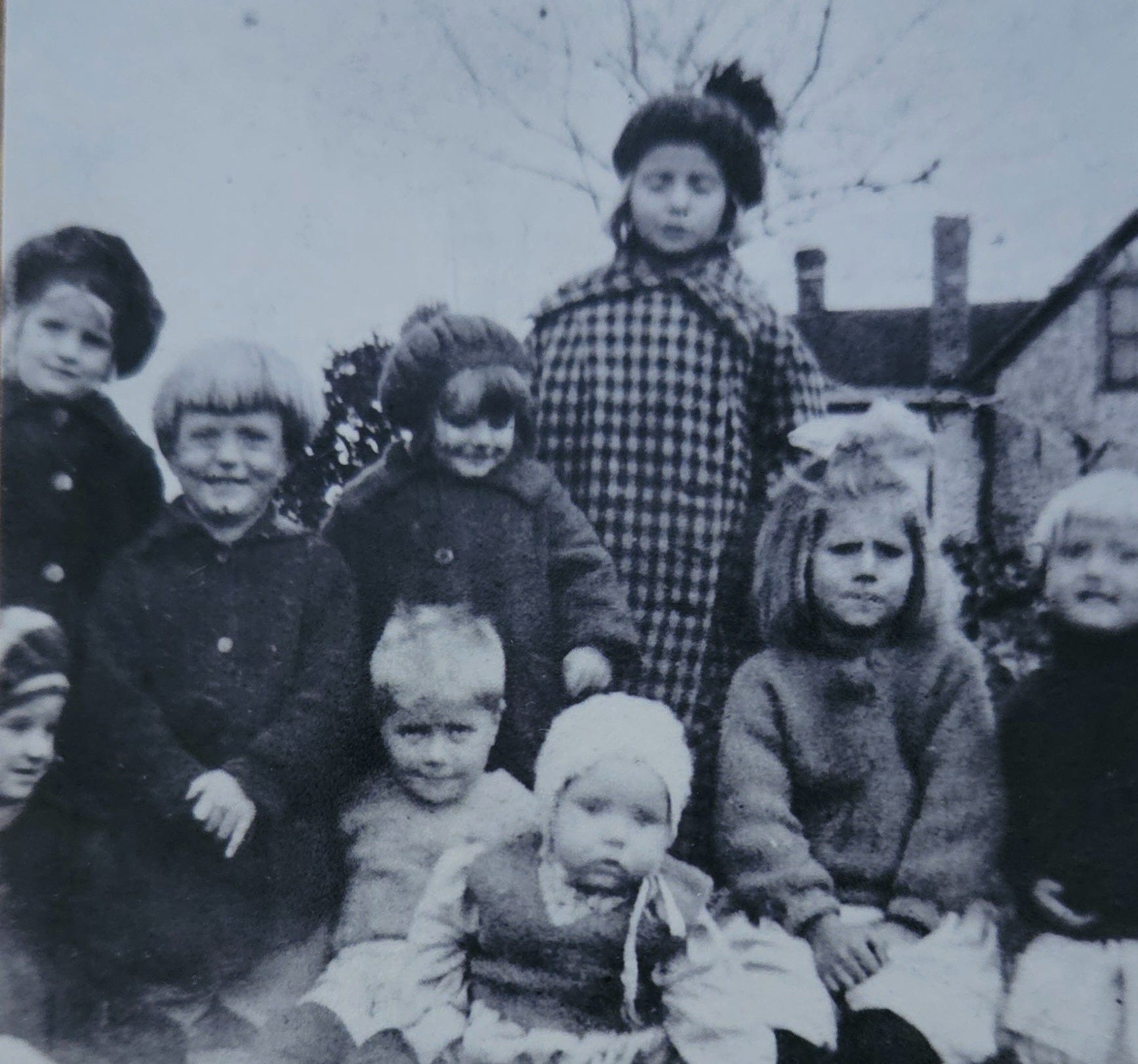
Some of Sarah’s great-great-great-grandchildren, Springhill, Nova Scotia, 1921; my mother is the blonde in the black sweater on right
Sarah was silent a long time. “Go play,” she directed. Then, turning to her daughter as the children ran off, “That is the worst part. Don’t go if you are with child. The journey alone, walking long distances or bouncing if you’re riding, is dangerous. Don’t have a child until you have a house and a midwife, or at least a knowledgeable woman.”
“And how will I avoid that?” Elizabeth asked plaintively. “This child will be born,” she patted her belly, “but they just keep coming.”
“I just told your father I wouldn’t be having a child in wartime. I already had Abraham while he was off fighting, and I told him I wouldn’t do it again. It was too dangerous. Thousands of us refugees trying to get out of New York at the same time, afraid for our lives. Ships crowded with people with nothing but blankets hung between us. It’s a wonder we all didn’t catch our death of sickness. Then, once we landed, just living in tents. I told Papa I wasn’t having a baby in a tent. It was all right when we landed, summertime, and we built cabins soon enough. But some poor souls arrived just before the snow! Snow almost covered the tents in winter. One of the women told me, they would take turns sleeping by the fire; warm up a plank, then pass it on to the children.1 Didn’t want them sleeping too close to the fire in case they rolled into it. I don’t know how they didn’t all freeze to death.
“Your brother Isaac wasn’t born until we had a house on our own land and a crop planted.”
“I’m not sure I could tell Samuel…” Elizabeth trailed off.
“Oh yes you can. Of course,” Sarah chuckled, “every once in a while, I had to remind Jeremiah. Set him to make sure Abraham didn’t fall overboard the ship. Remind him to leave me money in case the baby needed a doctor while he was scouting the land grant. But Uncle Peter’s wife had babies in that time. We all lived together, remember! Always one crying or smelly or grabbing something, like knives or gunpowder. She was always worried, carrying on about “the babies, the babies, the babies.” All I had to do was say, “Look at Peter!”
Sarah smiled at the memory, but Elizabeth’s face did not lighten.
“I’m just not like you, Mama,” she murmured. “I don’t think I can refuse.”
Sarah steered her daughter to sit on a rock. “Let me look at you.” She walked in a slow circle around Elizabeth. When she finally stopped, she had tears in her eyes.
“Yes, yes, we are not the same person. And it was different for me. Your father was well aware of what I gave up when I married him. If I had wanted to stay in New York with my family, I could have run off, and he wouldn’t have been able to follow me. I would have found safety with them as Patriots, but he had committed treason. I would have had a terrible life without him, but it was my choice. And what I was asking was completely reasonable.
“Now for you, it’s not the same, but…” Sarah considered. “You could also refuse to go. You could stay here with Papa and me. It would be a terrible life for you; parents are a poor substitute for your own husband, your own children, your own home. I wouldn’t recommend it. But you could choose it.”
Elizabeth cocked her head and pursed her lips. “Or….I could tell him to go first, and build the house, and the children and I would follow later.”
Sarah nodded. “That’s exactly what you could say.”
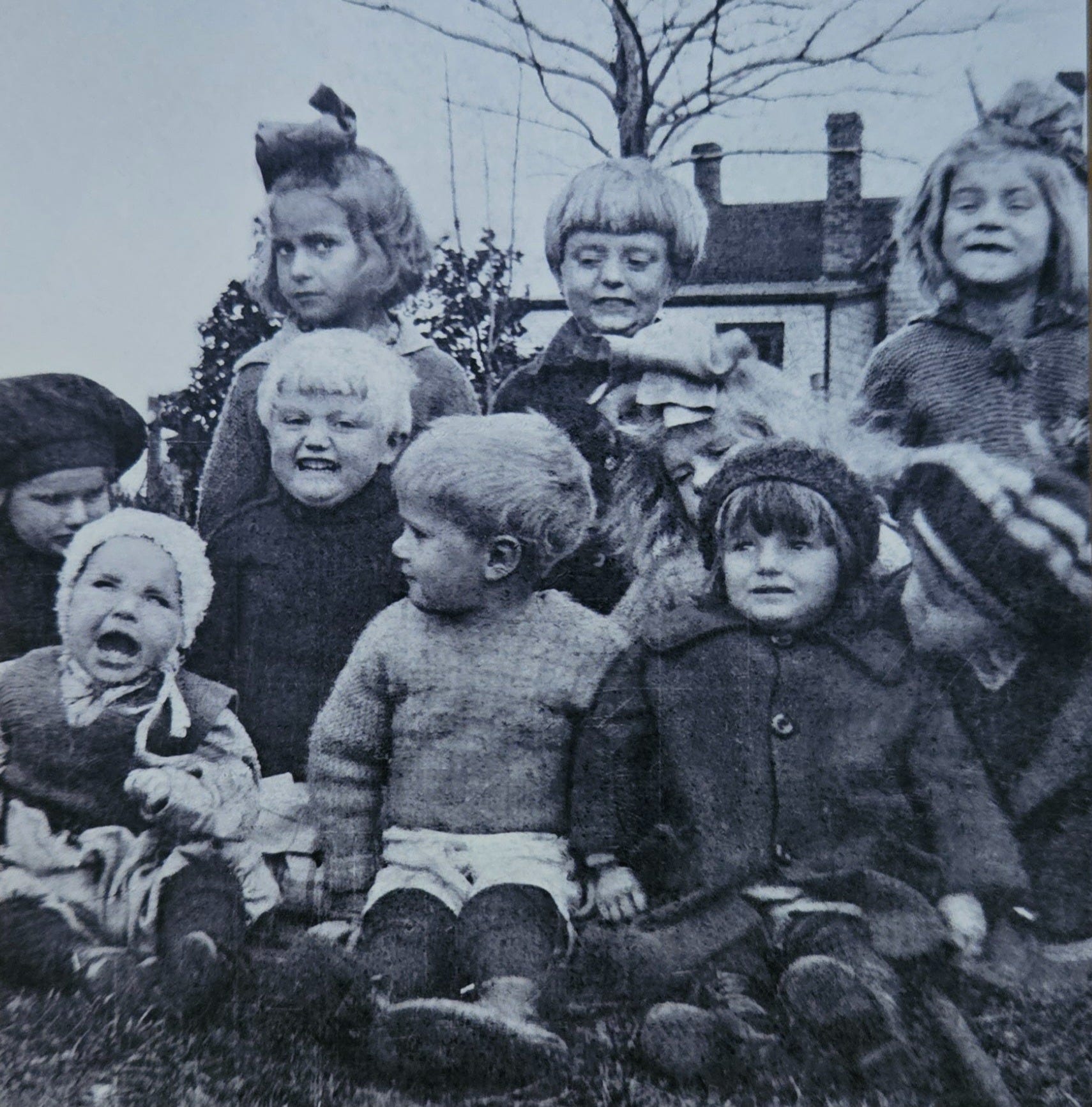
Some of Sarah’s great-great-great-grandchildren, Springhill, Nova Scotia, 1921; my mother is the angry blonde in the black sweater
A Chronicle of a Pioneer’s Wife….a factual account
A woman living in a rural area in Sarah’s time could expect to deliver, over the course of her child-bearing years, eight to twelve children at home with the help of experienced women or, if she was lucky, a midwife.
Sarah likely gave birth with the help of her mother-in-law, sisters-in-law, and other women of the community. A midwife probably was not present in such a sparsely populated area. Jane Hamilton of Truro was a well-known midwife who started delivering babies after her own family was complete. However, tho local to Westchester, she cannot be used as an example, since she practiced between 1851 and 1893… she could have delivered Sarah’s great-grandchildren! Martha Ballard of Maine, who delivered 816 babies between 1785 and 1812 and kept a detailed diary,2 probably better illustrates what childbirth was like on the Cobequid Grant.
Childbirth was a female community event. Men were banished from the house, as it was considered indecent and shameful for a man to see an undressed woman. The women provided companionship, comfort, distraction, practical help, and prayer on what was a painful and potentially deadly journey.
The first part of delivery was the contraction stage, during which the laboring woman would walk around as much as possible to hasten delivery. This went on while waiting for the midwife, if there was one, to arrive. When the woman in charge determined that the forcing or bearing pains had come, the delivery began. The third stage, the lying-in, was a rest and recovery period for the mother, during which her female companions did the cooking, washing, care of older children, and other household chores so the mother could concentrate on the new baby. The lying-in period lasted three or four weeks if possible.3
Martha Ballard had a day-of-birth child mortality rate of about four percent, and almost half of those were stillborn. Rural women generally had healthier births than upper class women; they were hardy from physical labor, less exposed to disease, disdainful of disfiguring fashions like corsets, and strong-boned from sunlight.
Midwives were highly esteemed members of communities, arguably commanding the highest respect a woman could earn on her own. Communities recruited them, providing housing or payment in kind. Midwifery was an all-purpose medical delivery system, treating ailments, laying out the dead, and testifying in cases concerning women and infants.4
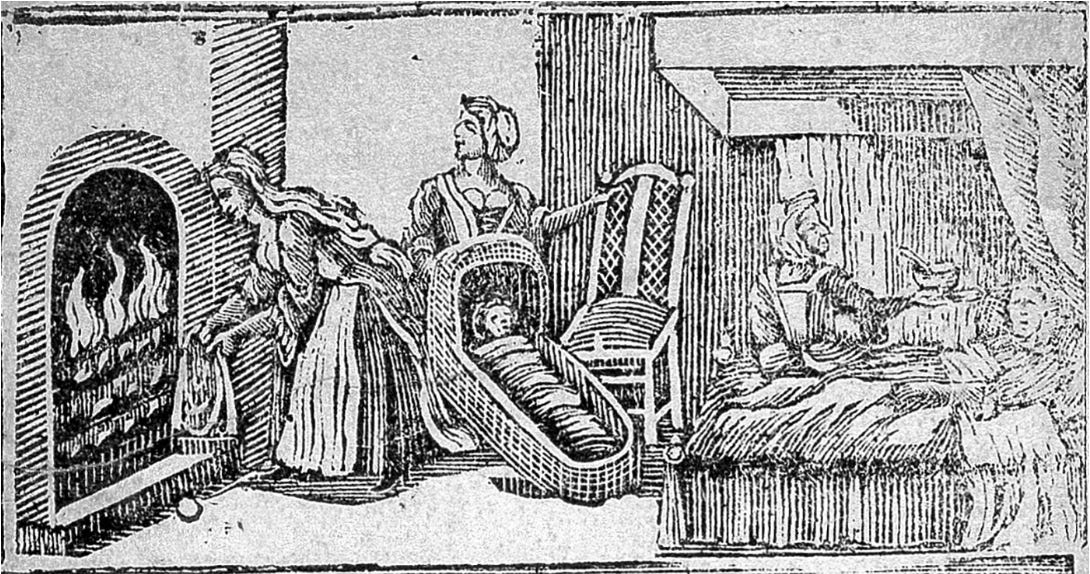
Frontispiece of “The Compleat Midwife’s Companion,” 1725 edition of “The Midwives Book, or, The Whole Art of Midwifry Discovered” written by Englishwoman Jane Sharp, 1671, a widely used instruction manual for midwives, https://en.wikipedia.org/wiki/Jane_Sharp
A skilled herbalist, a midwife had knowledge of helpful plants passed down thru generations of women. Black root was a Mi’kmaq tonic given to women before and after birth that Cobequid women knew of. Red raspberry leaves made into tea, used by midwives for centuries and common in Westchester, are still used today to strengthen uterine muscles.5 Blue cohosh triggered labor. Yarrow tea slowed postpartum bleeding. Cramp bark helped uterine cramping. Valerian had a calming effect.6
Sarah’s own childbearing follows these patterns. By the time Elizabeth started her family, Sarah had given birth to six sons and two daughters that we know of, all of whom survived to adulthood.
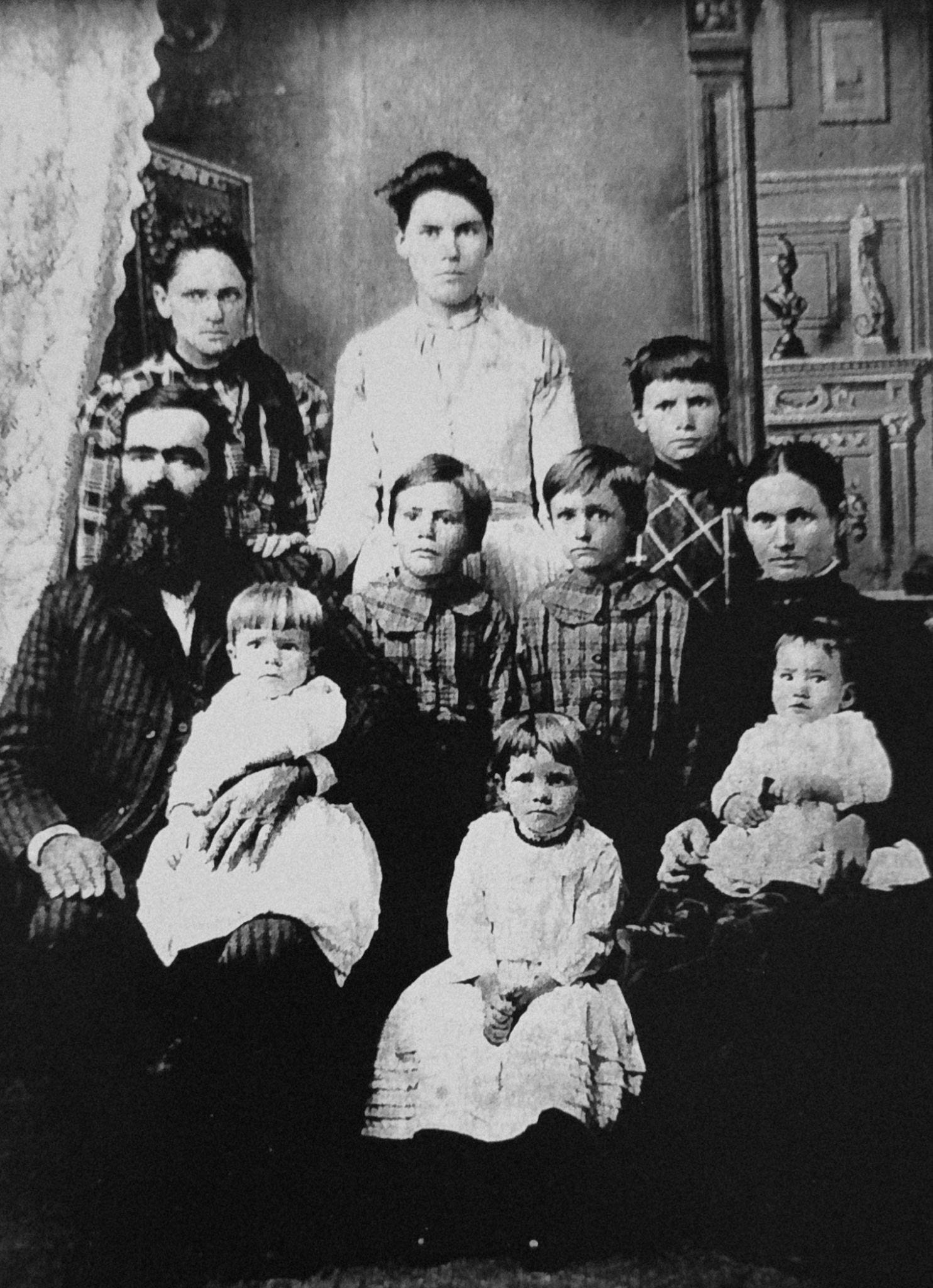
Sarah’s great-granddaughter, also named Sarah Rushton, with her husband Robert and 8 of their 12 children, about 1890 in Iowa. One child died in infancy. Sarah went on to have 3 more children after this photo was taken.
Babineau, Annabelle, https://loyalist.lib.unb.ca/atlantic-loyalist-connections/loyalist-lowdown-hannah-ingraham-childs-perspective
https://en.wikipedia.org/wiki/Martha_Ballard
Ulrich, 183-85; Catherine M. Scholten, “‘On the Importance of the Obstetrick Art’: Changing Customs of Childbirth in America, 1760-1825,” in Women and Health in America, ed. Judith Walzer Leavitt (Madison, WI: The University of Wisconsin Press, 1984)
Kirkman, Alyssa. “The Meeting of Mothers, Midwives, and Men.” Harding University, Spring 2013
https://www.thebump.com/a/red-raspberry-leaf-tea
https://mossherbalism.com/herbs-historically-used-in-pregnancy/
All photos in the author’s collection unless otherwise specified.
Comments
Post a Comment